Plumbing 101: Essential Terms Every Homeowner Should Know
Have you ever stood in your basement while a technician pointed at a tangle of pipes, using words like “vent stack,” “p-trap,” or “backflow”? It can feel like they are speaking a completely different language. At Benner Plumbing & Heating Ltd., we believe that a well-informed homeowner is a confident homeowner. Understanding a few basic plumbing terms and definitions won’t just help you navigate a conversation with a pro; it can help you spot minor issues before they turn into costly water damage.
If you are planning a sleek bathroom renovation or simply trying to figure out why your kitchen sink smells, this master glossary is designed to bridge the gap between technical jargon and everyday home maintenance.
The Backbone of Your Home: Common Drainage Terms
Your drainage system is a marvel of gravity and physics. Here are the terms you’ll hear most often when things aren’t flowing quite right.
-
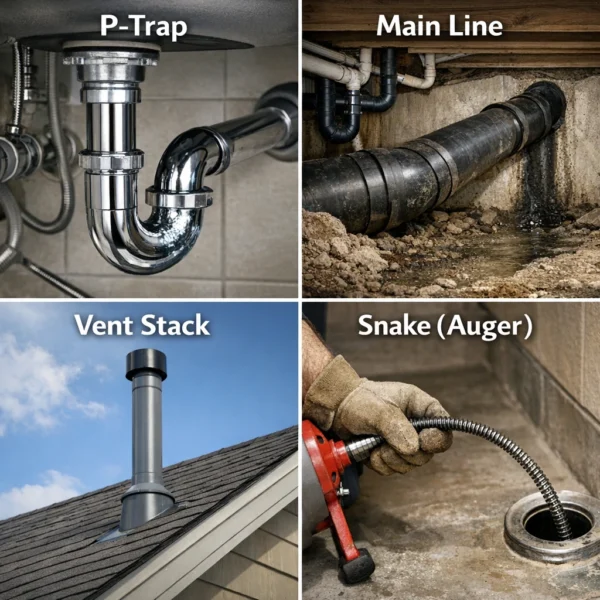
P-Trap: This is the U-shaped pipe located under almost every drain in your house. Its job isn’t to catch wedding rings (though it does that too!). Its primary purpose is to hold a small “seal” of water that prevents sewer gases from backing up into your home.
-
Main Line: This is the primary artery of your home’s drainage system. All your sinks, toilets, and tubs flow into the main line, which then carries waste out to the municipal sewer or your septic tank.
-
Vent Stack: Pipes need air to move water efficiently. The vent stack is the pipe that leads to your roof, allowing air into the system so that water flows smoothly—much like how a straw needs an opening at the top to let liquid move freely.
-
Snake (Auger): A flexible, coiled metal cable used to break through stubborn clogs deep within your pipes that a standard plunger can’t reach.
Pressure, Flow, and Regulation
Water doesn’t just sit in your pipes; it is under constant pressure. Understanding these plumbing terms and definitions helps you protect your appliances from wear and tear.
-
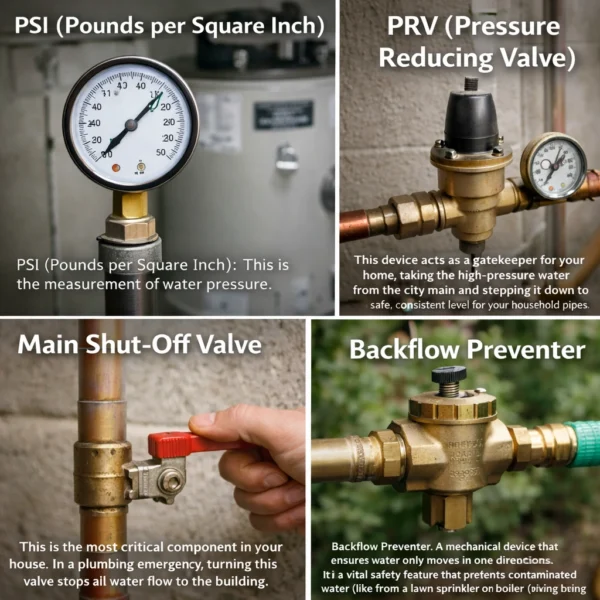
PSI (Pounds per Square Inch): This is the measurement of water pressure. In Calgary, maintaining the right PSI is a balancing act. Too low, and your shower feels like a drizzle; too high (usually over 80 PSI), and you risk damaging your dishwasher and water heater.
-
PRV (Pressure Reducing Valve): This device acts as a gatekeeper for your home, taking the high-pressure water from the city main and stepping it down to a safe, consistent level for your household pipes.
-
Main Shut-Off Valve: This is the most critical component in your house. In a plumbing emergency, turning this valve stops all water flow to the building. Every member of your family should know exactly where this is located.
-
Backflow Preventer: A mechanical device that ensures water only moves in one direction. It is a vital safety feature that prevents contaminated water (like from a lawn sprinkler or boiler) from being sucked back into your clean drinking water.
Renovation & Final Fixture Jargon
If you are looking at upgrading to a modern bathroom with glass shower enclosure, you will encounter terms related to the construction process.
-
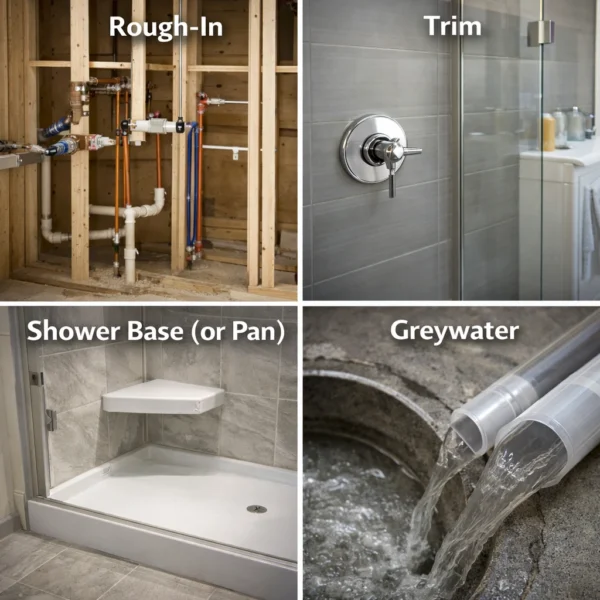
Rough-In: This refers to the stage of a project where the “skeleton” of the plumbing is installed. The pipes are run to the right locations, but the walls aren’t closed yet, and the final sinks or toilets haven’t been attached.
-
Trim: This is the final stage. It includes the visible parts you interact with every day—faucets, showerheads, handles, and the hardware for your glass shower walls.
-
Shower Base (or Pan): The floor of your shower. At Benner Plumbing, we offer various brands and styles, including Fleurco, which provides versatile seated and corner options to fit your specific “trim” needs.
-
Greywater: This is the relatively clean waste water from your baths, sinks, and washing machines. While not drinkable, it is distinct from “blackwater” (sewage).
Heating and Water Care
In our unique Alberta climate, the way we heat our water and homes is just as important as the pipes themselves.
-
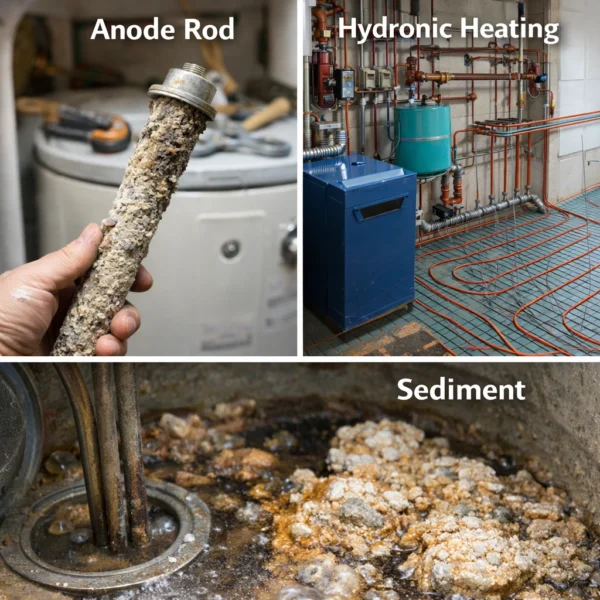
Anode Rod: Inside your water heater sits a “sacrificial” rod. Its sole purpose is to corrode so that your tank doesn’t. By attracting minerals that cause rust, it saves your tank from leaking. Replacing this rod every 3–5 years is the best way to extend the life of your water heater.
-
Hydronic Heating: A system that uses hot water to move heat through the home, common in boilers and luxury in-floor radiant heating systems.
-
Sediment: Over time, Calgary’s hard water leaves mineral deposits (calcium and magnesium) at the bottom of your water heater. This “sediment” can reduce efficiency and cause a “popping” sound when the heater is running.
Why the Right Definitions Matter
Understanding these plumbing terms and definitions empowers you to be a better steward of your home. When you can tell a plumber that your “P-trap is dry” or that your “PRV is whistling,” you save time, reduce diagnostic costs, and ensure the job is done right the first time.
At Benner Plumbing, we’ve been the trusted voice for Calgary homeowners since 1958. We don’t just fix pipes; we help you understand your home’s systems so you can enjoy total peace of mind.
Put Your Knowledge into Action
Whether you’re ready to start a renovation or need a professional to look at your main shut-off valve, our licensed team is ready to help.
Visit the Benner Plumbing & Heating website to explore our services or call us today to schedule your expert consultation!